
Guides
3PL Warehouse Management Software Checklist
A 3PL has many clients on one floor, and that changes what you need from warehouse management software. A twelve point checklist to take to every demo.
How-tos

When a delivery does not match the notice, count again with a second person, record the type and quantity of the discrepancy, hold the affected stock, and tell the client the same day. Take the Monday when a client emails to say they sent forty cartons and your receiver counted thirty-eight. Who is right, and who pays?
The answer rarely depends on who is more honest. It depends on what you recorded at the dock door, and when. This page gives you a routine you can print for the receiving desk.
Each one needs a different response. A short count needs a recount, a damage needs photos, and a wrong item needs the client to say what should happen to it.
The routine starts with the notice, so settle three things in advance.
Ask clients for an advance notice on every delivery, with SKU, quantity, carton count and pallet count. Ask for a reference number you can match to the carrier's paperwork. And put the receiving rule in writing: counts are made at your dock within a set time, and your count is what the system records unless the client shows evidence otherwise.
Clients accept rules more easily when they hear them before the first delivery, not after the first dispute.
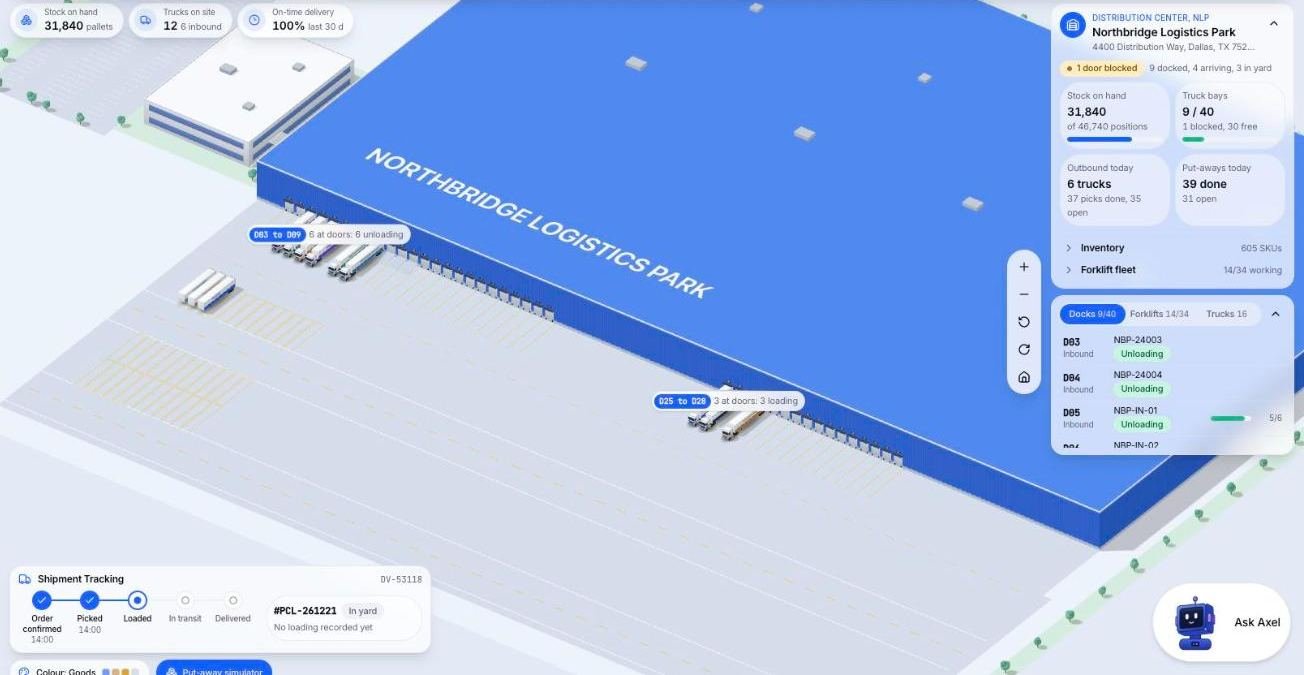
The image below is the yard view from the Microsive demo platform, using demo data, with trailers parked at the dock doors where these steps happen.
Keep the record short enough that people will actually fill it in.
| Field | Example (invented) |
|---|---|
| Receipt reference | Client A inbound 0412 |
| SKU | Blue mug 12 oz |
| Expected | 40 cartons |
| Counted | 38 cartons |
| Type | Short |
| Counted by / recount by | Receiver 1 / Receiver 2 |
| Photos | Pallet before unwrap, pallet after |
| Time | Arrival time and time counted |
| Client told | Date, time and who |
The time stamps matter more than people expect. If a pallet sat on the dock overnight before anyone counted it, the client's argument gets stronger and yours gets weaker.
Whatever you use, check that:
A spreadsheet can do this too. You need one tab for discrepancies and one rule: nothing leaves the hold area until someone writes down who released it and why.
Keep the message plain. For example:
"Your inbound 0412 arrived today at 9:40. The notice said 40 cartons and we counted 38, confirmed by a second count. Photos are attached. Please tell us by end of day tomorrow whether to hold, wait for the missing cartons or return the balance. The 38 are stored and available."
That message holds the facts, the proof, the options, a deadline, and a note of what is already safe. A client can answer it in one line.
Once a week, spend a few minutes on the discrepancy list and ask three questions.
Which clients cause the most? Their notices may be inaccurate, and a short call can fix that. Which receivers record the most? One may be more careful than the others, or one may need training. Which items have been open too long? Chase the client or agree a decision with them.
This is also the moment to check that your handling time shows up on the invoice, if your agreement says it should.
If you are comparing systems and discrepancy handling matters to you, ask each vendor to show a short pallet with photos, from receipt through to the client message. How they handle it will tell you a lot about how they think about your dock.
There are four. Short means fewer units arrived than expected, over means more arrived, damaged means the right units arrived but some are not sellable, and wrong item means something arrived that is not on the notice or the label does not match the contents.
Stop and recount, with a second person counting without seeing the first count. Most shorts turn out to be miscounts. If the shortage holds, record the count you have and ask the client to check with the sender or carrier.
Record the receipt reference, SKU, expected and counted quantities, the type, who counted and who recounted, photos, the arrival and count times, and when and to whom the client was told.
The discrepancy should be a record of its own, not a note. The stock should be held so it cannot be allocated to orders until someone releases it. Open discrepancies should show in one list by client and age, and changing a received count later should need a reason and a user name.
Send the facts, the proof, the options, a deadline and a note of what is already stored and available. For example: expected 40 cartons, counted 38 after a second count, photos attached, please say by end of day tomorrow whether to hold, wait or return the balance.
Guides
A 3PL has many clients on one floor, and that changes what you need from warehouse management software. A twelve point checklist to take to every demo.
Buying
Generic warehouse software assumes one owner. A 3PL has many. Where that gap costs money, and nine questions to ask any 3PL WMS vendor before you sign.
Cargohold
What Cargohold does for 3PLs, who it suits, and when you should buy subscription software instead. This is not a ranking.